
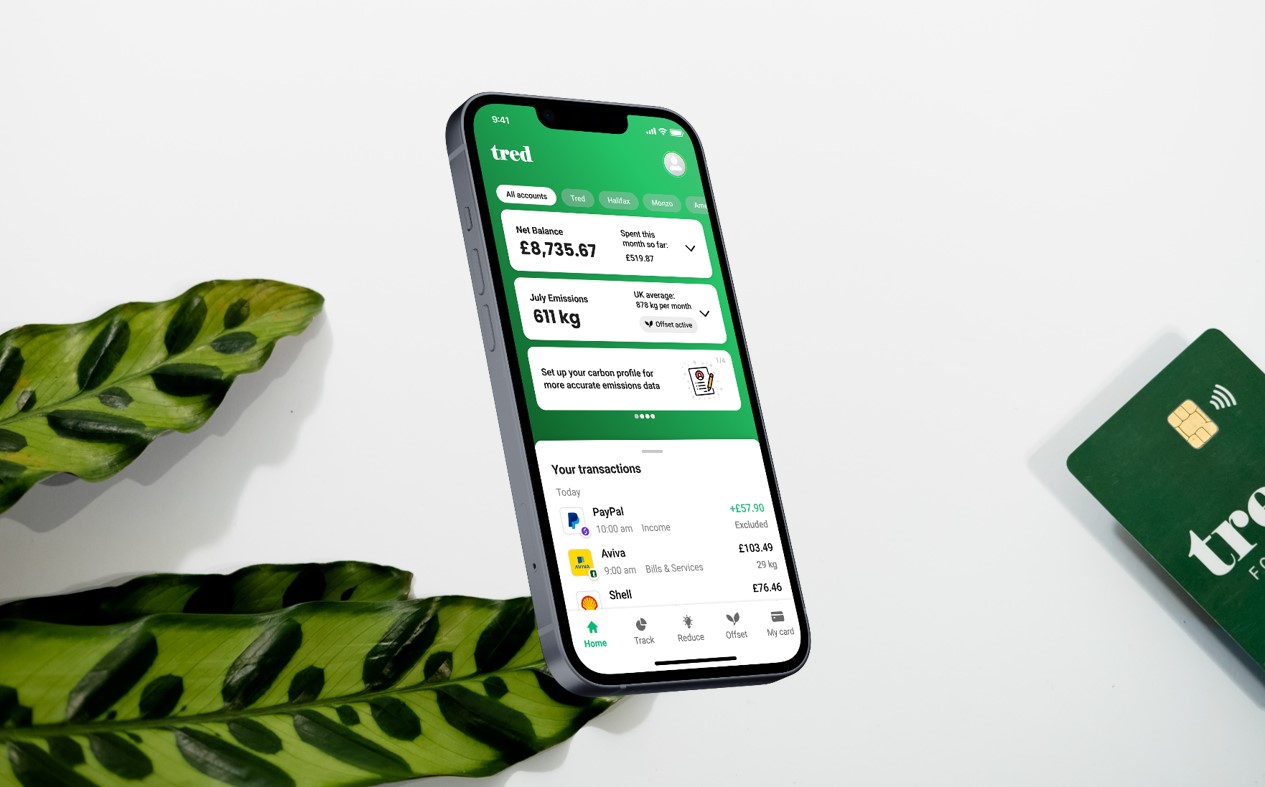
To change a metric, first you need to measure it. The best place to start when it comes to reducing the carbon footprint of your business is to first start tracking it. That enables you to see what the biggest sources of emissions are, so you can focus on the right areas.
But tracking the carbon footprint of a business can seem like a major challenge.
Calculating it manually would be an extremely time-consuming and complex task, requiring both expertise and lots of resource.
Many businesses therefore turn to carbon footprinting tools to get the answers they need, but we’ve found these to be expensive, and still require manual uploading of data in many cases.
Here at Tred we’re building an easier, faster and more accurate way to get your carbon footprint. It takes just minutes rather than days, and gives more granularity than other tools.
Tred Insight- Fast, easy carbon footprinting
Tred Insight works differently to other carbon footprinting tools. To save you time, it connects directly to your Business Bank account using a secure Open Banking connection. That allows it to convert your business’s spending data into a real-time, granular and accurate carbon footprint.
It also breaks down your emissions across scopes 1, 2 and 3 for greater insights and accurate reporting.
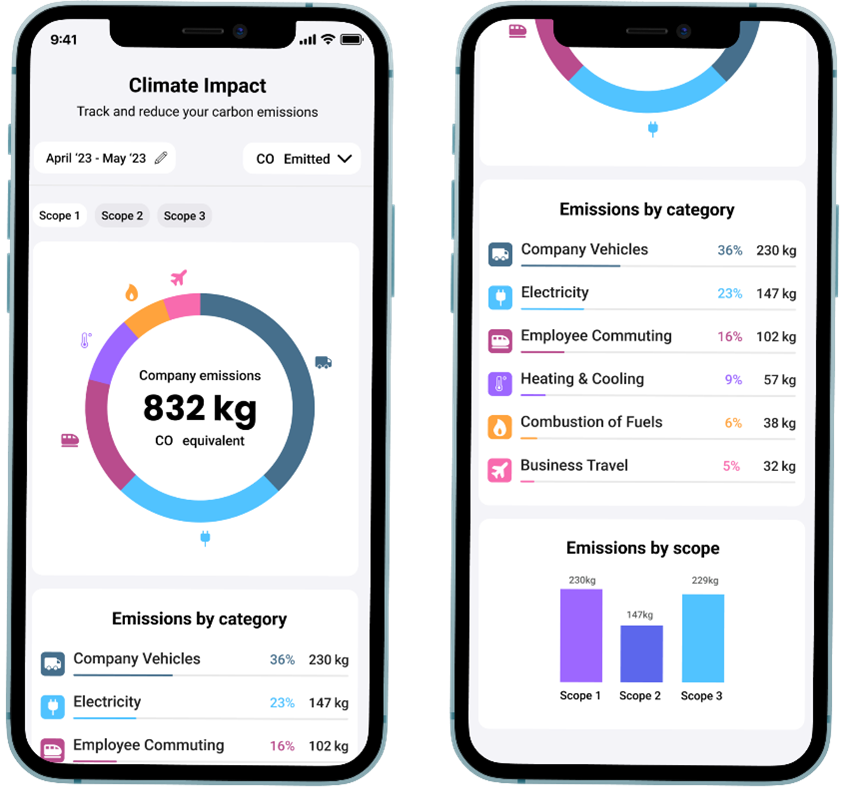
You can view emissions by category, by scope, and by date. The data feed allows you to retrospectively see your carbon footprint for the previous year, meaning you don’t just get your carbon footprint going forward but also instantly generate your current footprint for the previous year.
Using this data
Tracking your carbon footprint is the first step to shrinking it. Trying to reduce your business’s carbon footprint without first knowing what it is risks wasting effort on ineffective changes that don’t impact your biggest emissions sources.
Establish your top two or three emissions sources, and focus on what you can do to shrink them. You’ll tend to find a Pareto distribution in how your emissions break down, with the top categories accounting for the vast majority of your emissions. So, by focusing on these rather than spreading yourself thinly across everything you can have a much greater effect.
Typically, your largest source of emissions will either be electricity, gas for heating, or fuel for vehicles. It will depend on the nature of your business. If you sell a service rather than a physical product, it may be employee commuting, business travel or the energy use of cloud servers. We’ve rounded up the best ways to shrink the emissions of those sectors and more in our post on 12 ways to reduce the carbon footprint of your business.
If you want to use the fastest and simpliest way to carbon footprint your business, sign up to the Tred waitlist, to be among the first to use Tred Insight to get your business carbon footprint instantly.



0 Comments