

It’s likely you’ve already heard of greenwashing: it’s when companies make false or misleading claims about the environmental benefits of their product or service, to make eco-minded consumers more likely to buy from them.
As more and more people start to care about the environmental impact of the things they buy, more brands are jumping on the greenwashing bandwagon. This makes it tough to distinguish between genuinely eco brands, and those who are just trying to make themselves look good without any real green credentials to back it up.
The good news is, regulators in the UK are getting better at monitoring companies for their environmental claims. In 2022 there were several cases of the Advertising Standards Authority calling out brands for misleading consumers about their green credentials – in other words, greenwashing. We’ve rounded up 5 of the most notable examples here.
HSBC
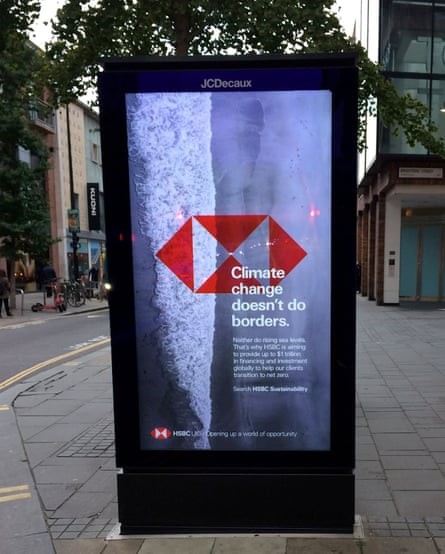
In October 2022, high-street bank HSBC was flagged by the ASA for a series of ads which promoted the bank’s investment in climate-friendly projects. The ads conveniently didn’t mention the fact that HSBC’s current investments into oil & gas create about 65.3 million tonnes of carbon dioxide per year…
The ASA banned this series of ads, and said that in future HSBC cannot exclude information about its contribution to carbon emissions from future ads – making it harder for high-street banks to hide the true climate impact of their fossil fuel investments behind greenwashing claims.
Innocent
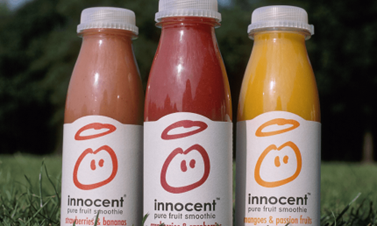
Innocent are known for their friendly, positive approach – including towards the planet. However, they’re less known for being owned by Coca-Cola, the world’s biggest plastic polluter.
This became pretty awkward when, in 2021, Innocent ran a TV ad promoting recycling and other climate change mitigation tactics. Activist group Plastic Rebellion claimed that an ad talking about recycling was pretty hypocritical coming from a brand with such a destructive parent company.
The ASA pointed out that Innocent didn’t demonstrate how buying their drinks would help consumers have a positive impact on the planet: the ad was cleverly designed to make people think Innocent are a planet-friendly company, without any proof points to back it up.
They banned the ad, and said that in future, Innocent would need to properly back up any environmental claims in their advertising.
Persil
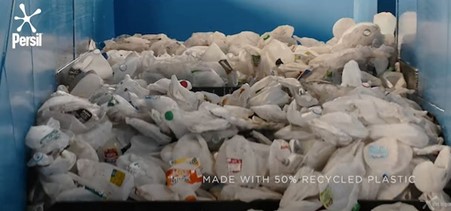
Persil (owned by Unilever) came under fire in August 2022 for a TV ad which claimed that Persil washing liquid is ‘kinder to our planet’.
The ASA pointed out that although Persil have some positive policies in place (for example, detergents that let you wash your clothes at lower temperatures to save energy), the word ‘kinder’ was unclear (kinder than what?) They banned the ad in its current form, and told Persil to back up their environmental claims more clearly in future
It’s another example of a brand being deliberately vague in how they talk about their environmental credentials. To be fair to Persil, they do have some genuine green initiatives – but they tripped up by not making their creds clear to consumers, in the hope that people will assume they’re even greener than they are. Honesty, clarity and transparency are key in avoiding greenwashing, and Persil failed to do that here.
Oatly

The Oatly greenwashing scandal was one we were particularly interested in here at Tred, because it was all about how the oat milk brand presented carbon emissions data in their ads.
A series of ads made claims such as:
- “The dairy and meat industries emit more CO2e than all the world’s planes, trains, cars, boats etc., combined”
- “Oatly generates 73% less CO2e vs. milk, calculated from grower to grocer”
The ASA investigated these claims, and found that Oatly had put a lot of work into calculating these stats. However, when they dug into the detail, they found some places where the data was either selectively chosen, or presented in a way that could mislead consumers.
For example, the data on emissions from meat and dairy used what’s called a ‘full lifecycle analysis’: analysing the emissions from every stage of a product’s creation and use. However, the transport emissions data only looked at the emissions created when a vehicle is being used – not the emissions required to manufacture the vehicle in the first place. This meant that Oatly weren’t using a direct comparison, so their claim was misleading.
Unlike some of the other brands on this list, it seems Oatly genuinely care about correctly measuring the impact of their product on the environment. However, this case shows just how tricky it can be to accurately calculate carbon emissions – and how important it is to explain those emissions to people clearly and fairly.
Here at Tred, we’re constantly striving to improve the accuracy of the carbon calculations we show our customers – read more about our ongoing improvements here.
Coca Cola sponsorship of COP27
Ok, so this isn’t technically a UK example – but as the leading global climate conference, we thought COP was worth including on the list.
Last year’s COP27, in Egypt, came under fire for featuring Coca-Cola as a lead sponsor of the event. Coca-Cola has repeatedly topped annual lists of the world’s biggest plastic polluters, and their decision to sponsor the conference was rightly criticised as an attempt to make their brand image more friendly and sustainable.
The fact that even COP isn’t immune to scandals like this shows how widespread greenwashing has become. If big brands aren’t going to change their business practices, and rely purely on sponsorships to ‘green’ their image, it’s even more important to support truly sustainable alternatives instead.
How we avoid greenwashing at Tred
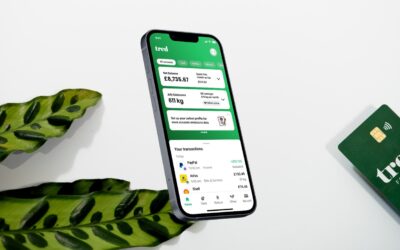
Here at Tred we’re all about giving you accurate and transparent environmental data. It’s why we’ve built our carbon calculation technology to show you your carbon footprint based on your spending. We’re always working on improving this data – read more here about the improvements we’re making to our carbon tech in 2023. And in the meantime, we recently introduced Recategorisation, so that customers can update the spending category of individual purchases to make sure the carbon calculation is correct.
We’re careful to use reputable sources whenever we share data with our customers or in our marketing, so that you can see for yourself where the stats we use come from. But we know there’s always room for improvement – if you think we can do better, drop us a message and let us know!
Want to test out the accuracy of our carbon footprint calculations for yourself? Download the Tred app today and give it a try!



0 Comments