
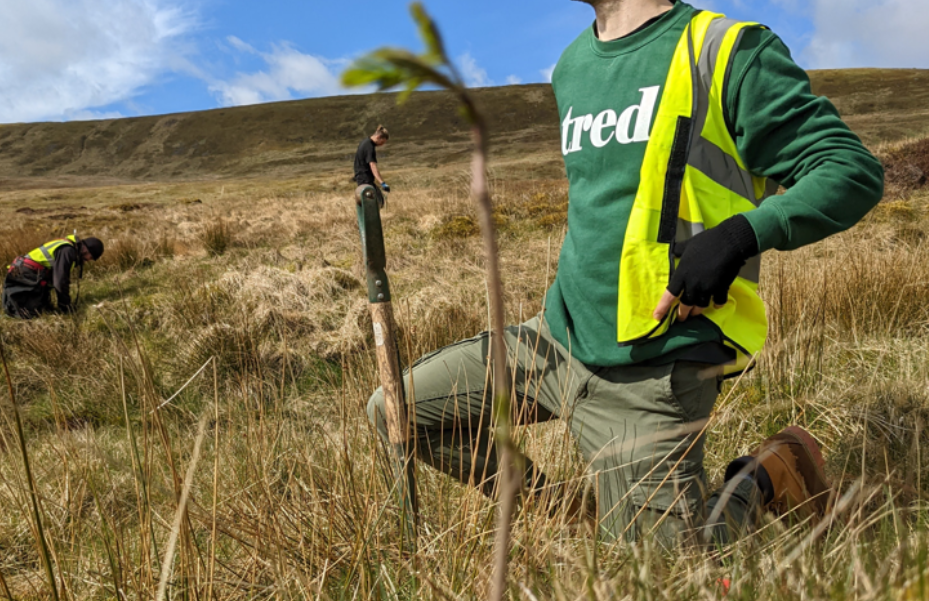
The typical tree will absorb 22 pounds of CO2 (that’s 9.9 kilograms) per year until the age of twenty, but it varies drastically by type of tree and where it’s planted, so there’s no easy answer. What’s important is planting the right trees for the local eco-system in a way that’s sustainable.
Tree planting is one of the most important things we do here at Tred as part of our mission to reduce our impact on the planet. In fact, a study undertaken on “The Global Tree Restoration Potential” suggests that forest restoration is the “best climate change solution available today”. So when we get an opportunity to deep-dive into the benefits of planting more trees, we’ll never pass it up. Let’s take a look at the question of how much CO2 a tree absorbs in more detail to dig into why this is a complex question.
How trees absorb CO2 – Photosynthesis
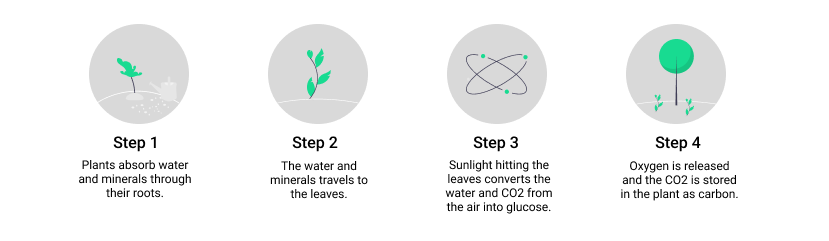
First off, a brief summary of how CO2 is absorbed by greenery. They say a picture tells a thousand words, but we say a chart is even better. This one tells you everything you need to know about the process of photosynthesis.
Factors affecting CO2 absorption
Unfortunately, there isn’t a simple answer to the question of CO2 absorption. A key factor in how much CO2 a tree absorbs is the growth of the tree, and this can depend on many things. These include the tree species, location, amount of water and sunlight, and amount of nutrients in the soil.
One Tree Planted however, has created a methodology to determine the average amount of carbon dioxide absorbed by a tree in the first twenty years of its life. Using an estimate of carbon per hectare of land, and average planting densities, they calculate that the typical tree will absorb 22 pounds of CO2 per year until the age of twenty.
Tred’s tree planting projects
Not only do trees absorb CO2 throughout their lifetimes, they also have benefits including stabilising soil, filtering stormwater, and providing homes for wildlife. This is why it’s so important to ensure that tree species planted are native to the site, and contributing to biodiversity at the location.
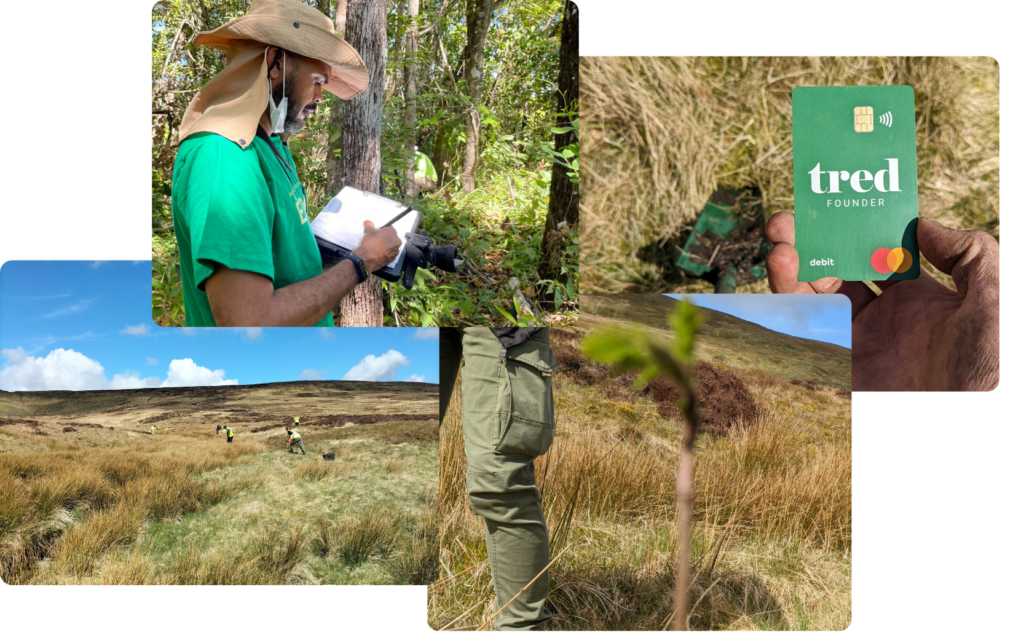
Here at Tred, we support the Wild Ingleborough project through the Yorkshire Wildlife Trust, taking measures to ensure that we are benefiting the ecosystem, and enhancing the local landscape.
This includes bare planting – planting trees without a plastic guard, or using one crafted with a biodegradable material, avoiding straight lines for a more natural look, and planting only in the right places where the trees will thrive, avoiding boggy areas where there is a valubale and unique wetland ecosystem. During the 2021-2022 season, the Trust planted a whopping 66,000+ trees at the project site; no small feat!
Yorkshire Wildlife Trust takes a huge amount of care when selecting the species planted, ensuring that they are suited for life in the Yorkshire Dales. Take a look at the selection below and see how many you recognise.
- Downy birch
- Oak,
- Grey willow
- Goat willow
- Eared willow
- Rowan
- Blackthorn
- Hawthorn
- Bird cherry
We also support tree-planting initiatives further afield, working with Eden Reforestation Projects to help restore forests across the world. Working closely with local communities, Eden Projects focuses on both mitigating climate change, and enhancing opportunities for “economic self sufficiency” through tree planting initiatives, and ever-adapting reforestation techniques.
Each time you tap your Tred card, we send ten percent of our revenue from the transaction to support one of these schemes. It doesn’t cost you anything extra, or effect what the merchant selling to you pays. Even better, you can track your environmental impact on our app, seeing just how much your carbon footprint shrinks with every environmentally friendly choice you make.
Feeling inspired? Download Tred to start your tree-planting journey today.




0 Comments