
The world is reaching a tipping point in terms of the climate crisis, and employers around the world are considering the ways they can reduce their carbon emissions and do more to help the cause. With pressure mounting to reach net zero targets and customers becoming increasingly attuned to the need for sustainable action, employers no longer have the luxury of burying their heads in the sand when it comes to environmental impact.
It may feel like a daunting prospect, but even small changes can have a big impact. For businesses ready to make a change, here are a few suggestions for how to reduce the carbon footprint of your business.
What are the large energy consumers for businesses?
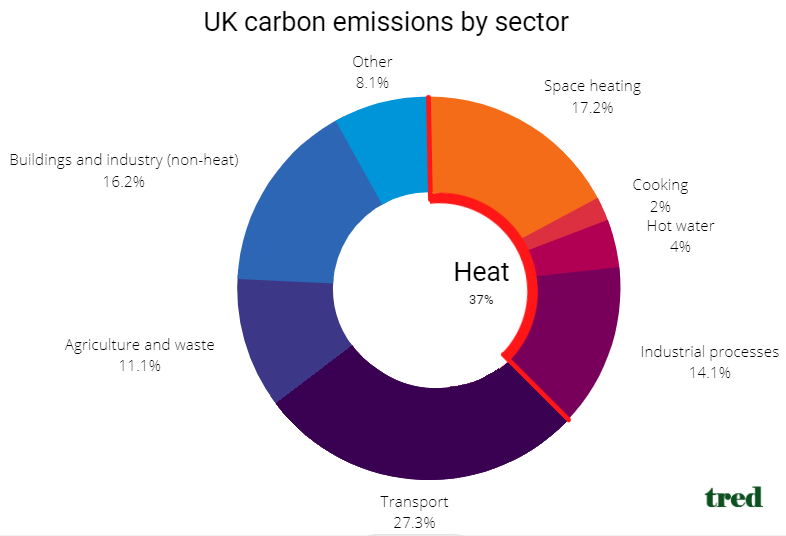
All businesses require energy in some form. These include IT networks and data centers, heating, and transportation. The internet has certainly streamlined many of our business activities today, but it’s also contributed to energy usage, and for individual businesses, that can increase the size of their carbon footprint. In the UK, heating is the single largest cause of emissions, followed by transport. It will be different for each business, so it’s important to track your usage to see where the biggest areas are.
Research suggests that small businesses use anywhere from 5,000kWh and 15,000kWh in gas and electricity, while a large business can exceed 50,000kWh in electricity and over 65,000kWh in gas. From lighting and heating to tech and industry-specific equipment, businesses use power in various ways, but when it comes to the most power used, businesses in commercial services, manufacturing, food and drink, agriculture and publishing are the biggest consumers.
Audit your energy
Tracking your energy use is one of the most effective ways to reduce your consumption, because it gives you a very clear overview of where your business is using energy ineffectively and how you can make more sustainable choices. Tred already lets you track all your personal emissoins in oen place. We’re working on creating business accounts, which will let you track emissions for your business. You can sign up now for our business account waitlist to be the first to hear when we launch.
An energy audit assesses your current gas and electricity use against the needs of your organisation, looking for waste and suggesting improvements along the way for each step of your organisation. Energy efficiency audits consider everything from your processes and systems to employee habits that could be contributing to a larger footprint, so you can make changes along the way for a better future. By carrying out such checks several times a year you will ensure you’re staying on the right track.
Think about how you travel
You may find transport is a big part of your businesses emissions, especially if you factor in your workers commutes (which fall under scope 3). The method of transport being used is the biggest factor here. We found from analyising Tredders travel spending habbits that although Tredders spent similar amounts on fuel (Petrol/Diesel) and public transport, their emissions from driving were many, many times higher.
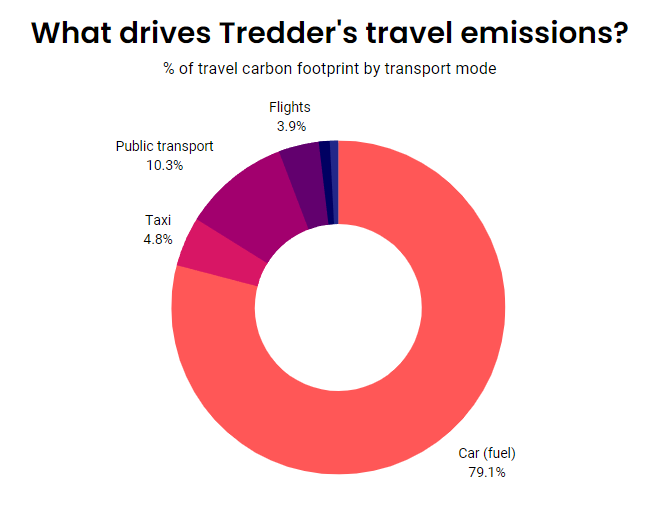 Finding ways to switch car journeys out for train or bus journeys can make a big impact.
Manage your IT systems in a greener way
You may not think about your IT setup when it comes to reducing carbon emissions, but as we’ve seen, IT can be a large contributor to emissions. The energy costs to keep them running to the resources required to build equipment and the amount of technology that goes to waste every year all contribute to waste and environmental harm.
Digital files are more environmentally friendly and more secure for your business, not to mention cheaper than keeping paper copies and maintaining printing equipment. Web hosting can also be an easy way to work in an eco-friendlier way. Web hosting is essential for any modern business but it’s incredibly energy intensive, with data centuries using high-powered computers that generate immense heat which, in turn, requires cooling systems. Going green with your web hosting contributes to a more positive environmental impact than traditional hosting, without it compromising your business operations. Here at Tred, we use a carbon neutral hosting provider that runs its servers on 100% renewable energy.
Switch to renewable power
It’s never been easier for businesses to choose renewable sources of power, with so many green energy providers on the market and renewable energy systems more accessible than ever before. From solar panels on the roof to heat pumps and EV charging units, businesses can find innovative ways to reduce their reliance on fossil fuels and produce less pollution. In many cases, choosing sustainable power can save businesses money and help to increase profits in the long term, in addition to helping reduce carbon emissions.
Offset your carbon
Carbon offsetting is a way businesses can reduce their carbon emissions by buying emission reductions that contribute to eco-friendlier projects and environmental innovations. This might be carbon capture, such as planting trees, or carbon reduction, such as renewable energy systems and developing energy efficient technologies.
The goal in reducing your carbon footprint is to make sustainable, lasting changes first, and offset what can’t be reduced. Offsetting shouldn’t be used as an easy solution for big problems, but rather a way of counteracting the areas of your business that can’t be changed.
However, for those areas in your business where you can’t make changes right now, carbon offsetting can be an effective way to balance the emissions your business produces and make a positive impact where it’s needed most. Choose your offsetting projects wisely, however. Carbon offsetting isn’t currently regulated by a governing body, so opt for reliable and certified schemes to be sure they’re operating in a sustainable way. Tred can help here by letting you dynamically offset your exact footprint each month with hand-picked and verified offset plans.

Doing more for the environment should be a priority for every business given the state of our climate, but it’s about more than simply recycling. Auditing your energy use is an essential step that many businesses overlook, but without knowing which areas of your business are responsible for your carbon emissions, it’s not possible to make impactful changes. Similarly, offsetting carbon emissions is beneficial, but it should not be used as a single solution. Companies need to take a holistic view of their energy usage to find ways they can make lasting changes for a positive future for all.
If you’re interested in a tool to help your buisness track, reduce and offset it’s carbon emissions, sign up to our Tred buisness account waitlist.



0 Comments