
We’re all looking to live more sustainably… and it could be easier than you think. Small changes can make a big impact, so we here at Tred are taking you through our top six simple swaps for a more sustainable lifestyle.
Public Transport for the win
The wheels on the bus go…a long way toward reducing your carbon footprint. Research shows that worldwide, transport produces approximately 23% of man-made CO2 emissions. However, rail travel only accounts for around 1% of transport emissions, whilst taking the bus produces slightly over half of the ‘greenhouse gases of a single occupancy car journey’. Swapping the occasional car ride for a cycle or trip on public transport is a simple way to make a difference.
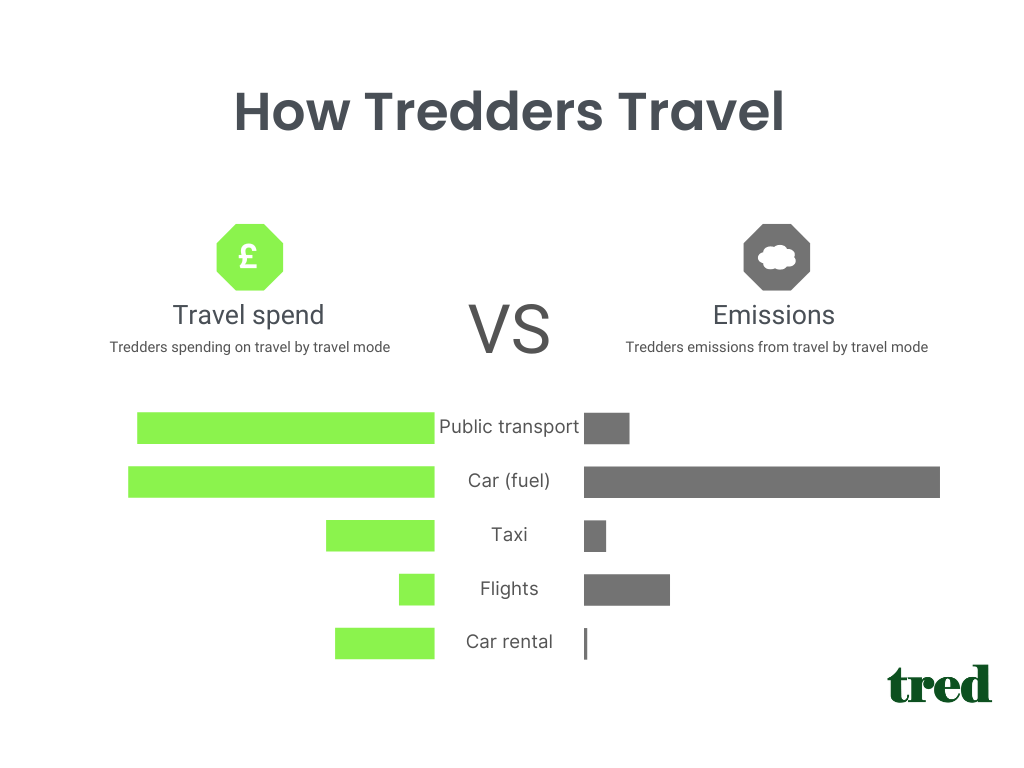
Using our carbon footprint tracking tech, we looked at the travel spending and carbon emissions of our Tred users, and found that whilst spending on trains, buses, metro, and trams accounted for 33% of users’ transport-related spending, it caused just 10% of their carbon emissions. That’s a big contrast from using the car, as buying fuel (Petrol or Diesel) accounted for about 34% of users’ transport spending but a whopping 79% of their emissions from travel.
Bring your custom to a carbon-neutral business
Save (the planet) as you spend, by being mindful about where you make your purchases. Do we have any recommendations? Of course we do…
Thinking about changing your network provider? Honest Mobile, the world’s first carbon-negative mobile network, looks to help balance the impact of communication technology, removing ‘double the carbon’ created within your phone’s lifestyle.
Update your fitness wardrobe with BAM Bamboo Clothing. Created soft and durable pieces using bamboo fabric, and with an aim to achieve 0 carbon footprint by 2030, this clothing brand keeps sustainability at its core. And to complete your activewear look, certified B Corp and carbon-neutral business Allbirds, offers sneakers with style.
Try the veggie option
According to a 2021 study, animal-based foods produce twice the ‘global greenhouse gas emissions’ of plant-based foods, with beef having a particularly high impact. This is due in part to the clearing of forests for animal feed, as well as the production of methane from the livestock itself. As we said, it’s all about the small changes, so if you don’t feel like you could go plant-based full time, why not opt to cut out the meat once a week? Alternatively, try eating more locally sourced foods – it is estimated that transportation accounts for ‘nearly one-fifth of all carbon emissions in the food system’. The chart below gives you the info on what foods have high and low footprints so you can make smarter choices.
Make second-hand your first choice
From vintage stores to car-boot sales, there are multiple places to buy second-hand fashion, with the second-hand market value expected to double within 5 years. And with fashion causing up to 10% of global carbon emissions, opting for pre-worn items is a great way to make an impact. It’s estimated that buying second-hand clothing can save 500 pounds of carbon emissions per person per year. And if that’s not enough to convince you, just think of the savings. Check out Depop to discover a world of second-hand style at your fingertips, or use it to sell your own pre-loved clothing items and help make fashion more circular.
Second hand not for you? Take a look at the Reduce section of the Tred app to find some great sustainable fashion from companies with a focus on reducing their impact.
(LED) light up your life
Thinking about making some changes at home? Take a look at your lighting. Globally, lighting accounts for almost ‘5% of global CO2 emissions’, but this could be combated by LEDs. With comparative energy savings of 50-70% against older technology, a global switch to this lighting type could save upwards of 1,400 million tons of CO2.
Think before you buy
We’ve all reached for something whilst shopping, only to realise we didn’t really want it once we get home. Two months later, it ends up in the bin, destined for the landfill. These landfill sites can release methane, whilst burning waste often produces toxic gases, contributing to air pollution. Taking two minutes to decide whether you really need that festive cushion cover is an easy step in your journey to a more conscious lifestyle.
And whilst you’re thinking twice, consider whether you need to go to the supermarket for dinner tonight after all. Too Good To Go aims to reduce food waste by allowing businesses to list surplus food daily on the app. Search for your favourite restaurant or cafe, then buy or collect delicious products at an unbelievable price. Or take a look at OLIO, an app created to allow neighbours to share out items they no longer want – one person’s old bananas are another’s key ingredient for their famous banana bread.
Have you tried any of these steps already? Or are you thinking of making a swap or two? Let us know below, or check out the Reduce section of the Tred app for more ideas on reducing your impact.


0 Comments