
Every time we get a new joiner at Tred we are faced with the same challenge. We run through the Tred product, and get to offsetting. We ask the person; do you know what offsetting is?
“Errrrm….I’ve heard of it. I think I do.”
“Great! Can you explain it to me?”
“……..no”.
Who can blame them? It’s a phrase that’s becoming more commonly used, but we often skip the important bit: explaining what it is!
Before we get into offsetting, there are some basics to cover first. You may have heard of greenhouse gases, and how releasing them in excess has a negative effect on the environment. If you want a refresher on this, have a quick read here.
So we want less greenhouse gas in our atmosphere. Here’s where carbon offsetting comes in. Carbon offsetting is the act of doing something to reduce how much greenhouse gas ends up in our atmosphere. There is a growing list of different ways this can be done, and a few ways to categorise the different methods.
Types of carbon offsetting: a simple explanation
Bear in mind, the types of offsetting we’ve used here are just examples – there are more types than we’ve listed! To keep things short, we’ve also used ‘CO2’ (meaning ‘carbon dioxide’) in these explanations, instead of saying ‘greenhouse gases’ every time.
| Capture existing emissions by directly removing greenhouse gases that are already in the atmosphere | Avoid future emissions by reducing the release of greenhouse gases over time | |
| Nature-based solutions | Reforestation. Trees absorb carbon dioxide, so planting new trees in areas where they’ve been cut down helps increase the amount of CO2 that’s absorbed from the atmosphere. | Forest conservation. When trees are cut down and burned for fuel, it produces CO2 – plus we lose the valuable carbon storage they provide. So by protecting forests and keeping trees alive, we avoid releasing those future emissions. |
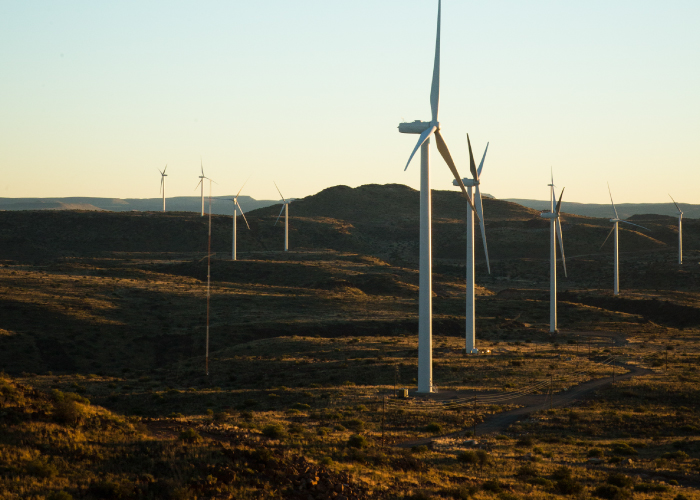
| Technology-based solutions | Biochar. Biochar is a carbon-rich material produced by heating biomass waste. The creation of biochar permanently stores CO2 in a solid form, which is why it can be used as an offsetting method. | Renewable energy (e.g. wind farms). Unlike burning fossil fuels, generating power from renewable energy doesn’t produce any CO2. So investing in renewable energy projects reduces the future need to burn fossil fuels and emit more CO2. |
So how does offsetting work with Tred?
When you pay money to an offsetting plan through Tred, your money contributes to those offsetting projects you’ve chosen to support. Whether it’s paying to plant more trees, or to develop exciting new direct air capture technology – you’re supporting projects that will help capture or avoid carbon emissions.
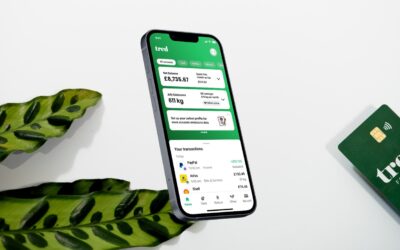
And thanks to Tred’s innovative carbon tracking technology, we make sure that you only pay to offset the exact amount of carbon that you’ve emitted each month. Here’s how that works in more detail:
- You use your Tred debit card to buy things throughout the month.
- Every time you make a payment, whether it’s a cup of coffee or a train ticket, the Tred app calculates the carbon emissions of that purchase.
- At the end of the month, you can see your total carbon footprint for that month, calculated accurately based on your spending.
- You choose an offset plan in the Tred app – for example, a reforestation plan.
- We’ll work out how much it’ll take to offset the exact amount of CO2 you emitted throughout the month, using your selected plan. For example, if you emitted 640kg of CO2 in July, and you’ve chosen a reforestation plan, how many trees need to be planted to absorb your 640kg of CO2 from the atmosphere?
- We’ll then calculate the cost of planting that many trees through your selected plan, and charge you that amount. (You can set a cap in-app to make sure you never pay more per month than you’re comfortable with).
Carbon offsetting is a complex topic – check out other articles on our blog if you want to dive deeper. But if you do your research and decide offsetting is something you want to do – there’s nowhere better to do it than with Tred.
Dowload the Tred app today to starting tracking, reducing and offsetting your carbon footprint.


0 Comments