
So you want to decrease your environmental impact, but you don’t know where to start? You’ve come to the right place…it’s time to look at the biggest drivers of your carbon footprint.
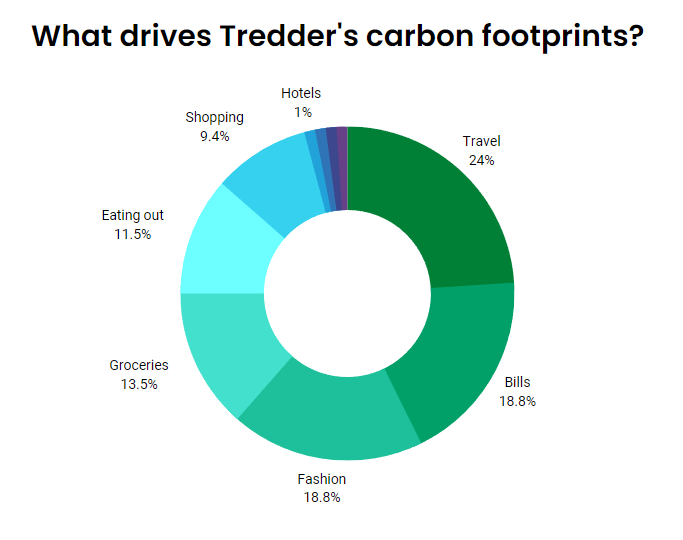
At Tred, we use carbon tracking technology to show our users the carbon emissions of every transaction made using their Tred card. Below, we’ve calculated the areas that create the highest levels of CO2 for Tredders – are they what you expected? Keep reading for a breakdown of the biggest sectors.
Travel:
A jet-set lifestyle sounds glamorous, but it’s not without impact. Here, we’ll take a look at the transport involved.
Globally, around one-fifth of the world’s global CO2 emissions came from transport in 2020, with only the power sector contributing more to global greenhouse gas emissions. Road travel is the biggest offender, producing 75% of transport emissions, compared to 11.6% from aviation.
Want to travel in a more eco-friendly way? Rail travel only contributes about 1% of transport emissions…a great excuse to renew your railcard!
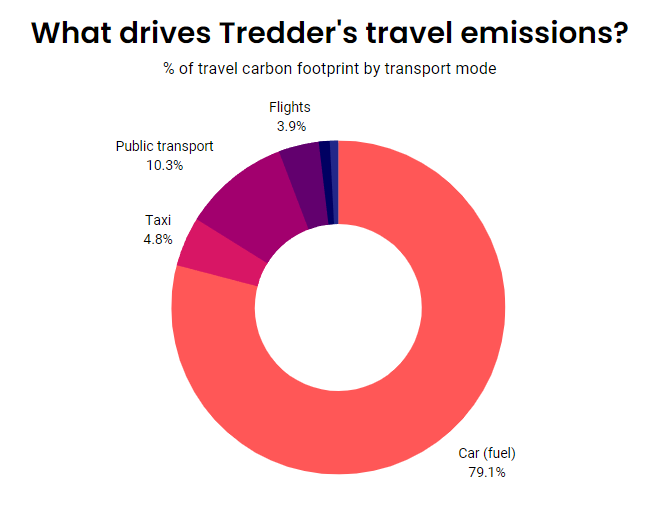
Within the transport category, buying fuel (petrol & diesel) accounts for by far the biggest share of emissions from the way Tred customers get around. So the key to reducing your transport footprint is take the train, bus or bike over the car.
Bills:
Bills is a broad category, but when it comes to bills affecting your carbon footprint, it’s mostly your electricity and gas use that are the main drivers..
In the UK about 50% of our electricity comes from burning gas (a fossil fuel), which drives a sizable chunk of our CO2 emissions.
Interestingly, the time of day when electricity is used has an impact on the CO2 emissions. This is because of the use of renewable energy – more electricity generated from sources such as wind and solar PV, means less generated from CO2-releasing fossil fuels. The weather and time of day impact how much energy can be generated from renewable sources, meaning that the CO2 intensity of electricity will also change. For example, solar PV will generate the most electricity in the middle of the day, whereas wind could be strongest at night.
You can check how clean or dirty the grid is at any given moment by checking the live energy mix or get the Grid Carbon app which we recommended in our post on the 12 best apps to help you live sustainably and lower your carbon footprint. The differences in the carbon intensity of the energy you use can vary – on a sunny and windy day fossil fuels will be a small part of the energy mix, and that electricity may only cause the emission of around 39 grams of CO2 per kWh, whereas on some days where gas makes up a bigger share, the electricity you use will cause around 250g CO2 per kWh. That’s a big difference! So if you check the grid mix before you use an energy intensive appliance like a washing machine you can reap big carbon savings. You can see the live mix of energy generation in the UK below. (CCGT means gas. It stands for Combined Cycle Gas Turbine)
Fashion:
Saving the planet never goes out of style. But fashion itself is actually responsible for a huge amount of carbon emissions – up to 10% globally.
This is due to a number of reasons, including the increased use of polyester (a fibre created using the fossil fuel petroleum) and the sheer number of clothing items being produced per year (a number that has at least doubled since 2000).
Many retailers are looking for ways to combat fashion’s impact, with sustainability being listed as both a huge industry opportunity and a challenge in the Business of Fashion and McKinsey & Company State of Fashion 2022 survey. However, the fact remains that fashion still contributes significantly to the world’s carbon footprint. In the Reduce section of the Tred app you’ll find some great sustainable fashion from companies working hard to reduce their impact on the planet.
Groceries and Eating Out:
The food system is responsible for a staggering amount of greenhouse gas emissions – over 30% globally. Emitting 17.3bn tonnes of carbon dioxide annually, this industry is a key area of concern, with the WWF conservation group describing food production as “one of the biggest threats to our planet”. What you eat can have a big impact though, and certain foods have a much bigger CO2 impact than others. When you know which are the big emitters you can make more informed decisions about what to choose.
Steps are being made to reduce the carbon footprint of what we eat. For example, UK supermarkets Tesco, Sainsbury’s, Waitrose, Co-op and M&S have committed to reducing their carbon emissions, writing in a joint statement: “By 2030 we need to halt the loss of nature”. As these supermarkets serve over half of all food shoppers in the UK, this is key in reducing the emissions of the system.
So what can I do?
Shrinking your footprint starts by understanding it. Sign up to Tred to get started on tracking your impact today.



0 Comments